
Quick answer
IPTV technology is legal and used by telecoms, hotels and broadcasters. What decides legality is licensing: a service needs the rights to the channels it distributes. Boxes are legal hardware; boxes "fully loaded" with unlicensed paid channels are what courts target.
On this page
The short answer
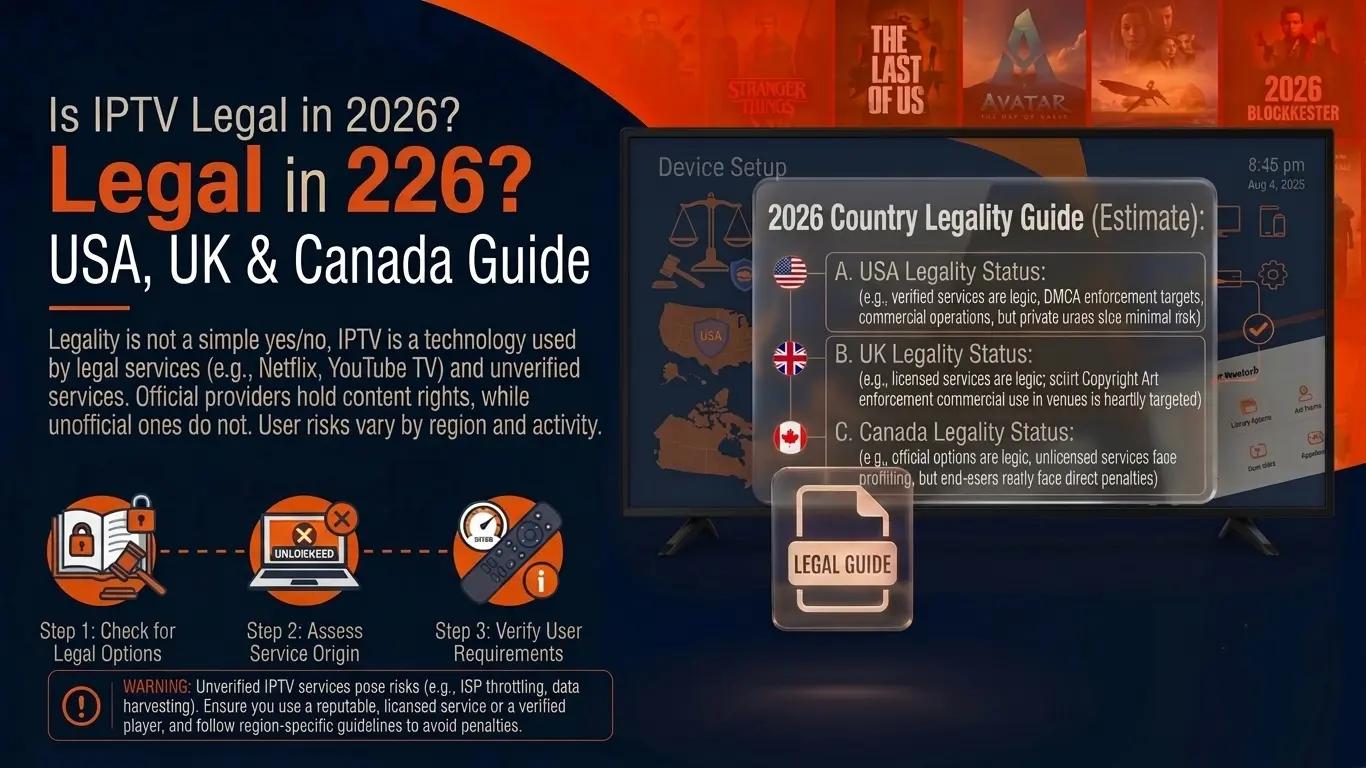
IPTV itself is legal. Telecom companies, hotels, universities and streaming platforms all use it. What decides legality is licensing: a service needs agreements with the channels and rights holders to distribute their content. A service that resells channels without those rights is unlicensed, whatever its technology.
Licensed vs unlicensed IPTV
| Licensed service | Warning signs of an unlicensed one | |
|---|---|---|
| Channels | Clear about which channels and regions | Promises "every channel in the world" |
| Company | Named business, contact details, policies | No company name, many look-alike domains |
| Payment | Normal payment methods, receipts | Only crypto or gift cards |
| Apps | Official app stores | "Fully loaded" boxes, cracked apps |
| Price | In line with the market | Implausibly cheap for premium sport |
Country by country
United States
US copyright law protects broadcasts and pay-TV channels. Distributing them without permission is infringement, and rights holders and industry groups have brought lawsuits and criminal cases against unlicensed IPTV operators. Licensed live-TV services are fully legal.
United Kingdom
UK law treats unauthorised access to and distribution of paid broadcasts seriously, particularly Premier League football and pay-TV channels. Courts grant "live blocking" orders that make ISPs block illegal streams during matches, and sellers of unlicensed services have received prison sentences.
Canada
Under the Copyright Act, selling or operating unlicensed IPTV is illegal. Rights holders have won injunctions against sellers of pre-loaded boxes and obtained site-blocking orders. Licensed services, including those from Canadian telecoms, are legal.
Are IPTV boxes legal?
The box is legal. An Android TV box, Firestick, MAG box or Enigma2 receiver is general-purpose hardware. The problem is what is installed on it: boxes sold "fully loaded" with add-ons or subscriptions that unlock paid channels without permission are what courts have targeted.
- Buying a Firestick and installing an app from an official store: legal.
- Buying a box advertised as "all channels free forever": a red flag.
Staying on the safe side
- Use apps from official stores and developers.
- Ask a provider what rights it has to the channels it sells.
- Be wary of offers that are far cheaper than the market.
- Use our provider checklist.
Not legal advice
This guide gives general information about how the law treats IPTV. It is not legal advice. Laws change and differ by country; check local rules or ask a lawyer for your situation.
Frequently asked questions
Is IPTV legal in the USA?
IPTV technology is legal and widely used by licensed services. Offering or selling channels without the rights to distribute them is illegal under US copyright law, and rights holders actively pursue unlicensed operators.
Is IPTV legal in the UK?
Licensed IPTV is legal. Selling or knowingly accessing unlicensed pay-TV, especially sport, can be a criminal offence, and UK courts have issued blocking orders against illegal streams.
Is IPTV legal in Canada?
Licensed services are legal. Operating or selling unlicensed IPTV violates the Copyright Act, and rights holders have obtained court orders against sellers and site-blocking in Canada.
Are IPTV boxes legal?
Yes, the hardware is legal: an Android box, Firestick or MAG box is just a device. What can be illegal is software or subscriptions pre-loaded to give unlicensed access to paid channels ("fully loaded" boxes).
Can I get in trouble for watching IPTV?
Enforcement mostly targets sellers and operators, but rules differ by country. This page is general information, not legal advice — check the law where you live.